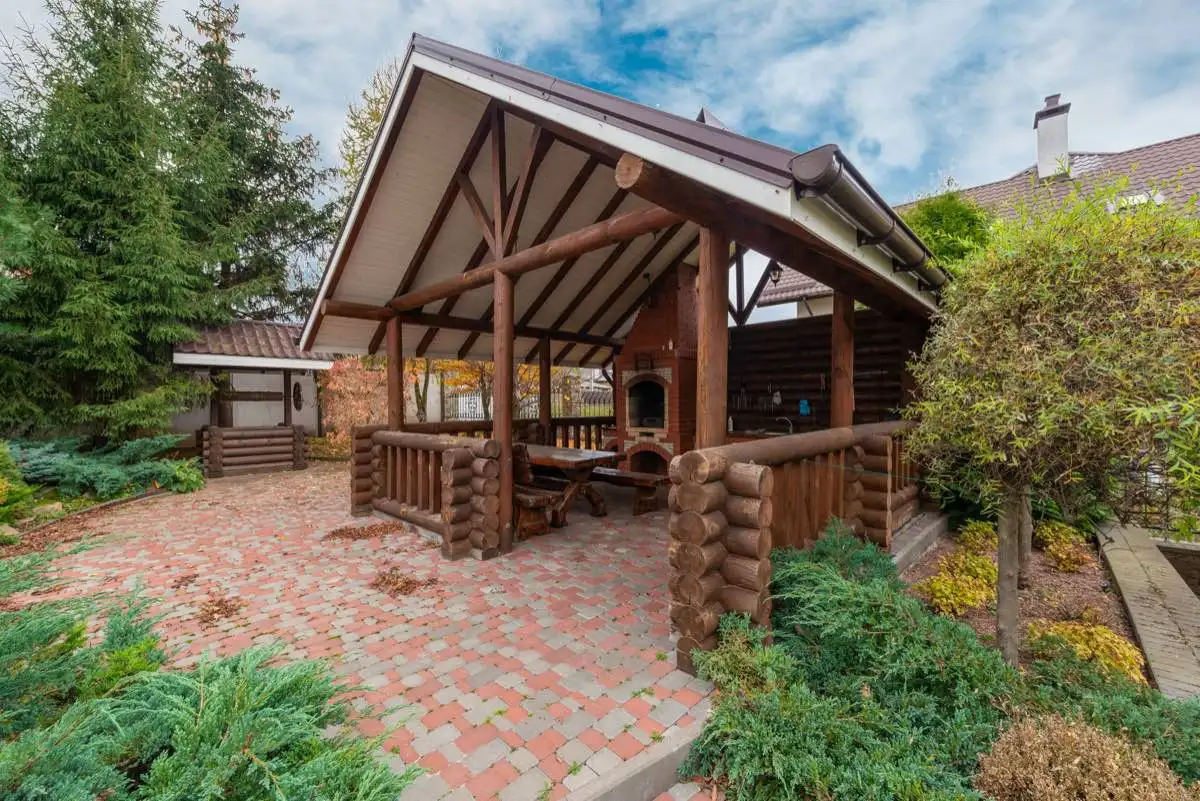
Short version: the best patio cover idea is the one that matches how you actually use the space. Want to eat outside in July without melting? A solid insulated roof. Want a clean architectural look with dappled light? A pergola or lattice. Want cheap shade for a corner? A shade sail. Everything else is a variation on those three, wrapped in a material choice (wood, aluminum, or vinyl) and a decision about whether it attaches to the house or stands on its own.
Here's the scene every backyard in Brownsville knows: the patio is gorgeous from 7 a.m. to 11 a.m., and then the sun clears the roofline and it becomes a griddle until about 5 p.m. So you've got a beautiful slab you can only use before breakfast and after dinner. The right cover is what turns those dead six hours back into usable room. Let's pick the right one.
The three cover types, honestly compared
Almost every design out there is a spin on solid roof, pergola/lattice, or shade sail. The differences that matter are shade, rain, cost, and looks.
| Solid roof (insulated) | Pergola / lattice | Shade sail | |
|---|---|---|---|
| Shade | Full, all day | Partial, dappled | Partial, angle-dependent |
| Rain protection | Yes, keeps you dry | No, rain passes through | No |
| Cost (installed) | Highest (~$15–$40/sq ft) | Middle (~$10–$25/sq ft) | Lowest (~$150–$1,500 total) |
| The look | Clean, room-like, modern | Architectural, warm, open | Casual, resort-ish |
| Best for | Actually living out there | Style + light shade | Cheap shade, fast |
The one-liner: a solid roof buys you the whole day, a pergola buys you the look, and a shade sail buys you a season. If you plan to put a table, a TV, or an outdoor kitchen under it, you want the solid roof. If you just want a pretty spot for morning coffee, a pergola earns its keep.
Materials: wood vs aluminum vs vinyl
The cover type decides the shape. The material decides how much of your weekend it eats for the next ten years.
- Wood (cedar, pine). Looks fantastic the day it's built. Costs less upfront for a pergola. The catch: in Brownsville's heat and humidity, wood is a commitment. It fades, cracks, and wants a sand-and-restain roughly every two to three years, and once rot starts, you're replacing beams, not just repainting them.
- Aluminum (powder-coated). The low-drama pick. Won't rot, rust, warp, or peel, holds its color, and shrugs off humidity. Costs a bit more than a wood kit and can't quite fake the grain of real cedar. But you install it and then basically forget it exists, which is the whole point.
- Vinyl. The middle child. Low-maintenance like aluminum, cheaper than premium wood, and it stays white without painting. The downside is it can get brittle and chalky after years of hard UV, and it flexes more in high wind than metal does.
Here's the opinion I'll actually plant a flag on: in a hot, humid climate, aluminum beats wood for anything you want to keep. A wood pergola looks incredible for about two summers, and then it's a sanding project every spring for the rest of its life. If you genuinely love woodworking, build the cedar one and enjoy it. If "outdoor living" to you means living outdoors and not maintaining a structure, go aluminum and never think about it again.
Patio cover ideas by what you actually want
Skip the mood boards. Pick the goal, then the cover follows.
You want full shade and a real room
Go with a solid insulated roof panel. It blocks sun and rain, and the insulated version drops the temperature underneath by 15 to 20 degrees versus an uncovered slab. This is the one that makes a Brownsville patio usable in the dead middle of summer. Add a ceiling fan and it goes from "shaded" to "genuinely comfortable." This is the core of a true insulated patio cover build.
You want indoor-outdoor living
Start with a solid cover, then close it in with screens or glass. A screen room keeps the mosquitoes off your dinner without walling off the breeze; a glass enclosure makes it a year-round room. It's a fraction of the cost of an actual home addition and you keep the airflow. If bugs or blowing rain are what's chasing you inside, a patio enclosure is the fix.
You have a pool
Prioritize two things: a material that ignores splashed water and chlorine (aluminum, obviously), and enough coverage to give swimmers a shaded landing zone without shading the whole pool. Poolside is also where a combination shines — solid roof over the seating and lounge area, open sky over the water.
You've got a small patio
Don't over-build it. A modest attached lean-to cover or a well-placed shade sail does more for a compact space than a giant freestanding structure that eats the whole yard. On a small slab, the trick is covering the seating zone and leaving the rest open so it doesn't feel like a cave.
Attached vs freestanding
Attached ties into your house wall, so it feels like an extension of the home and usually costs a little less (one side is already built). It's the default for a patio right off the back door.
Freestanding stands on its own posts, which lets you put a cover anywhere — over a detached pool deck, a fire-pit corner, a spot in the middle of the yard. It costs a bit more because it needs a full frame, but you're not limited to hugging the house.
Neither is "better." Attached for a back-door patio, freestanding for a destination spot away from the house.
The part nobody puts on the mood board: permits and wind
This is the gap most patio-cover listicles skip, and it's the one that actually determines whether your cover is still there next spring. A permanent, attached cover in Brownsville needs to be engineered and anchored to local wind-load code. That means real footings, rated connections, and a permit — not four posts sunk in a bucket of quick-crete.
The reason matters: an uncovered slab can't blow away, but a poorly anchored cover absolutely can, and when it goes it takes part of your roof with it. The DIY kits and the guy quoting you cash with no permit are exactly what turns into a projectile in the first real storm. A cover built right is boringly safe. A cover built cheap is a liability with a nice paint job. Budget for the engineering — it's the difference between a structure that lasts 20 years and one that lasts until the next front rolls through.
What it actually costs
Ballparks, so you can sanity-check any quote:
- Shade sail or big umbrella: $150 to $1,500. Cheapest shade, no rain protection.
- Retractable awning: roughly $1,500 to $4,500 installed. Nice for flexibility, more moving parts to fail.
- Aluminum pergola or lattice: about $10 to $25 per square foot.
- Solid insulated roof cover: about $15 to $40 per square foot, so a 12-by-16 (192 sq ft) usually lands somewhere in the $3,000 to $8,000 range depending on panels, screens, fans, and lighting.
Add-ons — fans, lights, an outdoor kitchen, screens — are where a simple cover turns into an outdoor room, and where the budget climbs. None of that is required to start. A bare solid cover is a huge upgrade on its own.
The bottom line
Pick the cover that fits the life you'll actually live on that patio. Want it usable all day, all year? Solid insulated roof, in aluminum, engineered to code. Want a good-looking spot for light shade? Pergola. Want cheap shade this weekend? Shade sail. Then build it once and build it right, because the cover that blows off in a storm was never the cheap one.
If you'd rather have someone measure it, engineer it, and hand you a firm number, Brownsville Elite Patio Covers designs and builds patio covers across Brownsville and the Brownsville area — from insulated solid-roof covers to aluminum pergolas and screened enclosures. Free estimate, no pressure: call (844) 719-4348.
Ready for a free quote in Brownsville?
Brownsville Elite Patio Covers — free estimate, clear scope, no pressure. Use the form on this page or jump to the homepage quote.
Related services in Brownsville
Brownsville Elite Patio Covers money pages — go straight to the service you need.
- Insulated Patio Covers →
An insulated panel is two roll-formed aluminum skins bonded to an expanded polystyrene core, and the core is carrying load rather than filling space. It ties the two skins together so the assembly acts as one section, which is why the roof spans from the house wall to the front beam with no joists under it.
- Freestanding Pergolas →
Standing a pergola on its own posts removes the single detail that causes the most trouble on this coast. No ledger, no head flashing tucked under someone else's shingles, no fasteners driven through a stucco or brick veneer wall.
- Sunrooms & Patio Enclosures →
Glazing in a patio changes its legal identity, and that is the first thing to establish. IRC Appendix AH requires the longer wall and one additional wall to be at least 65 percent open or glazed below 6 feet 8 inches.
- Aluminum Patio Covers →
Extruded aluminum earns its place here for unglamorous reasons. It does not rot, termites have no use for it, and it shrugs off a humidity swing that would move timber.
- Alumawood & Composite Covers →
Woodgrain composite covers are roll-formed aluminum with an embossed texture and a baked-on finish over hollow sections. From the seating area it reads as stained timber.
Frequently asked questions
What is the cheapest way to cover a patio?
A shade sail or a large cantilever umbrella is the cheapest real shade, usually $150 to $1,500 depending on size and whether it's installed. It blocks sun but not rain, so treat it as a warm-season fix, not a roof.
What is the best patio cover for rain?
A solid, insulated roof panel. It's the only common cover that keeps you dry in a downpour and drops the temperature underneath. Lattice, pergolas, and shade sails all let rain through by design.
Do patio covers need a permit in Brownsville?
Most attached, permanent covers do, and in Brownsville they also have to meet local wind-load code. Freestanding umbrellas and shade sails usually don't. Brownsville Elite Patio Covers pulls the permits and engineers the structure so it passes — call (844) 719-4348 if you're not sure what your project needs.
How much does a patio cover cost?
Most solid, installed patio covers run about $15 to $40 per square foot, so a 12-by-16 cover lands roughly in the $3,000 to $8,000 range. Pergolas and lattice covers run a little less; shade sails and awnings less still.
What is the most durable patio cover material?
Powder-coated aluminum. It won't rot, rust, warp, or need repainting, which is why it outlasts wood by years in a hot, humid climate like Brownsville's. Wood looks great new but becomes a maintenance project fast.
Can you add a patio cover to an existing patio?
Almost always. If your slab is sound, a cover attaches or freestands right over it in a day or two. If the concrete is cracked or too small, we'll tell you before you spend a dime on a cover that outlives the slab.
Local context
How this applies in Brownsville, TX
Every article here is written from patio cover work done in Brownsville and the Brownsville area, so the numbers reflect local labour, permit and material costs rather than a national average. Your own job can land either side of them depending on access, the condition of what is already there, and the materials you pick — insulated foam-core roof panels, W-pan and flat-pan aluminum roofing, powder-coated extruded aluminum.
The way to turn any of this into a real answer is to have someone look at your actual situation. The free estimate is free, itemized and written down, with no deposit and no obligation. Call (844) 719-4348 or start on the Brownsville Elite Patio Covers homepage.
Areas Brownsville Elite Patio Covers covers
Brownsville first, then the surrounding communities of the Brownsville area. Each has its own page with local detail rather than a copy of this one:
- Harlingen, TX — Cameron County, incorporated in 1910, population 71,829 at the 2020 census
- San Benito, TX — Cameron County, incorporated in 1911, population 24,861 at the 2020 census
- Los Fresnos, TX — Cameron County, population 8,114 at the 2020 census
- Port Isabel, TX — Cameron County, incorporated in 1928, population 5,028 at the 2020 census
- South Padre Island, TX — Cameron County, incorporated in 1973, population 2,066 at the 2020 census
- Laguna Vista, TX — Cameron County, population 3,520 at the 2020 census
Or jump to the full list of Brownsville services.
More from the Brownsville Elite Patio Covers blog
- Average Patio Cover Cost in Brownsville: Honest Breakdown
Most patio covers run $15 to $40 per square foot installed. Here's the real cost by material and size in Brownsville, TX, plus where the quote balloons.
- Insulated Patio Cover Cost Per Sq Ft in Brownsville
Insulated foam-core patio covers run about $30 to $60 per square foot installed in Brownsville, TX. Here's what R-value and core thickness really buy.
- Patio Cover Permits in Brownsville: What You Need
An attached patio cover almost always needs a permit. Here's what triggers one in Brownsville, TX, what HOAs add on top, and what it costs to skip it.
The Brownsville Elite Patio Covers Team
patio cover specialists serving Brownsville, TX
Written by the Brownsville Elite Patio Covers team — insured patio cover pros with 15+ years serving Brownsville, TX and the surrounding area.